This section got too long on my Lesbian Trash Panda post about “A Two-Spirit Journey” by Ma-Nee Chacaby, so I split it into a different post. Now you, gentle reader, get two posts! Wow, what a great deal!
If you’ve never heard the term Two-Spirit before, hopefully this provides some insight. I’m not Two Spirit — I am writing this as a queer person from Newfoundland, hoping to educate others about this interesting and important topic. I have tried to use sources from first-hand 2S accounts and Indigenous organizations for information as a starting point for people to learn about Two Spirit identities. If you are Two Spirit and see something amiss, I am happy to update anything – please let me know in a comment or through my contact form. Hopefully I have done a suitable job.
So, this is an enormous topic, and I will inevitably miss something. I encourage and welcome further research.
What is Two Spirit?
Two Spirit, Two-Spirit, 2-Spirit, or 2S is a pan-Indigenous umbrella term used to describe over a 100 alternative gender identities across many Indigenous North American cultures. What it means can vary from nation to nation or person to person.
“Traditionally, Native American two-spirit people were male, female, and sometimes intersexed individuals who combined activities of both men and women with traits unique to their status as two-spirit people. In most tribes, they were considered neither men nor women; they occupied a distinct, alternative gender status. In tribes where two-spirit males and females were referred to with the same term, this status amounted to a third gender. In other cases, two-spirit females were referred to with a distinct term and, therefore, constituted a fourth gender.”
Indian Health Services
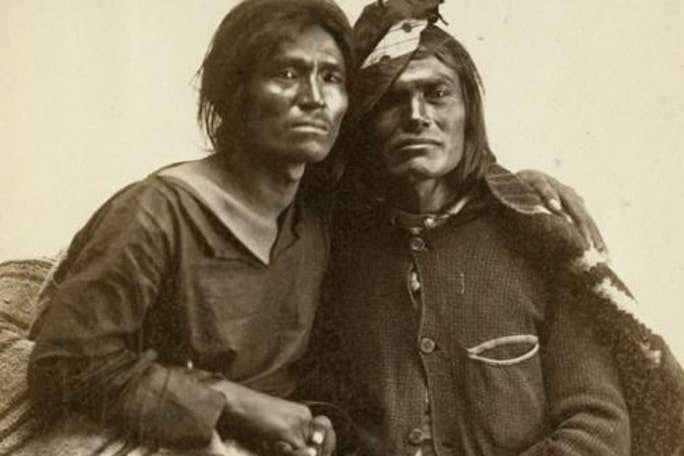
Two Spirit is an exclusively Indigenous identity. Two Spirit people often describe having the “spirits of both male and female gender“ in them; for them, being Two Spirit is, well, spiritual, and specific to that 2S individual’s culture and traditions.
Some Two Spirit people also identify as gay, lesbian, queer, bi, or trans. Some queer Indigenous people don’t identify as Two Spirit. Some Two Spirit people are cisgender. The term “Two Spirit” defies strict, specific definitions, which makes sense; the Two Spirit experience embraces the fluidity and complexity of gender, sexuality, and gender roles.
Pre-Colonial History
Prior to colonialism, many Indigenous peoples had a multifaceted understanding of gender and sexuality. Some Indigenous nations had specific terms to describe individuals with these fluid relationships to gender – the Navaho used the term Nadle, the Dakota/Lakota used Wintike, and in the Inukititut language of the Inuit it’s Sipiniq. There are over 130 documented terms from across Canada and the US used by various Indigenous peoples that describe their understanding of these alternative genders, each with its own specific meaning and cultural role. Many of these terms date back centuries.
Within the Indigenous worldview, the construction of gender and sexual identities is much more fluid, preferring to have people embody certain roles and responsibilities within their clan, family, community, and nation based on the expression of their own personal gifts.
Supporting Two-Spirit and Indigenous LGBTT2SQQIA Youth in the Ontario Child Welfare System
Traditionally, Two-Spirit people often held important positions in their communities – some 2S folks were healers and spiritual leaders; some were warriors; some were spouses; some blended various roles in their communities. It depends on the person and the community, but at the core, two-spirit people were important members of their societies.
Impact of Colonialism
TW: Homophobia, transphobia, racism, genocide, Residential Schools
In contrast to the place of honour many Two Spirit individuals had in their families, nations, and communities, in Europe’s Christian society, transgressing gender lines was considered a perversion. Homosexuality was a sin, and the concept of being transgender wasn’t really discussed. Individuals who defied traditional European gender roles were considered crossdressers, perverts, or insane, if they were even spoken about at all.
European colonizers and missionaries who arrived in North America in the 1600s brought this negative mindset with them and held a dim view of Two Spirit people. When discussing them in letters and reports back to Europe, they used a slur to describe 2S people (think an old French version of the f-slur). This slur was normalized, and became the common way to describe 2S people in Western literature, and it was actually used in anthropological discussions of 2S people up until the 1980s – which is completely fucked. This is part of the reason Indigenous activists coined the term “Two Spirit” in the 1990s.
Over the course of hundreds of years, European colonizers tried to erase Indigenous people from the North American landscape. This genocide included war, forced relocation, cultural erasure, and forced “re-education,” such as in the Residential School System.
Residential Schools
The Residential School System was an attempt to eradicate Indigenous culture by “teaching” it out of Indigenous children. Throughout the 20th century, Indigenous kids were kidnapped from their homes by the police and sent to schools where they were taught “Western values.” Children were punished violently for practicing their own culture – speaking their traditional languages, practicing their traditional religions, and for 2S people, just generally existing.
According to a report from The Truth and Reconciliation Commission, it was estimated between 4000 and 6000 Indigenous children died in Residential Schools – but that number is a grotesque underestimate. As I write this, searches are underway at former school sites; each has uncovered mass graves. Only a handful of schools have been searched so far, and the bodies of over 5296 6501 children have been found. Survivors live with trauma, and have had to fight against the Canadian government for recognition and reparations.
Most Indigenous children who went through the Residential School System were not Two Spirit, but I do think it is important to understand that homophobia and transphobia went hand-in-hand with racism and white supremacy when acting out atrocities against Indigenous peoples.
Two-Spirit People Now
Centuries of conversion meant that by the 1950s, many Indigenous people had Christian beliefs. The homophobia and transphobia pushed by Christianity means Two Spirit people can feel isolated from their Indigenous communities.
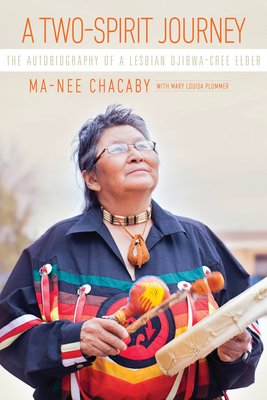
This was Ma-Nee Chacaby’s experience in “A Two-Spirit Journey.” Her grandmother, who remembered the old Ojibwe traditions, understood that being Two Spirit was a natural thing, but warned Chacaby her life would be difficult because of it. By the time Chacaby came out in the 1980s, she felt disconnected from her Indigenous community. Her love for other women clashed with the Christian beliefs of other Anishinaabe people. She lost friends, was attacked, and had to fight to save her job as a counsellor on a reserve due to homophobia. It’s tragic considering that, only a few generations before, her community would have celebrated her.
Two Spirit people also struggle for representation in the queer community – these spaces are often white, Western, and cisgender. Many white and/or queer people in Canada don’t know what being Two Spirit is – which is why I’m writing this essay.
The good news is, things are changing. In the 2000s, Ma-Nee Chaceby led a Pride March in Thunder Bay, with many 2S youth alongside her. More and more people are speaking about their experiences as Two Spirit people. Due to the dedicated work of Two Spirit activists, things have gotten better – but the impact of colonialism on 2S folks will last a long time.
Two-Spirit and Queerness
One of the things that struck me most when learning about Two Spirit people was that, prior to colonialism, they weren’t considered “queer” at all. Queer, as you may know, originally meant “strange” or “odd;” in English, it was used as a slur before being reclaimed by the, uh, queer community. (I plan on writing more about the word “queer” at a later point.) Europe generally viewed anyone who defied traditional European gender or sexual roles as perverse and an outsider.
Two Spirit people weren’t considered “odd” by their families or communities or nations; they were distinct, the way the sun and the moon and the stars are distinct, but without the negative, outcast connotations of queer. Relationships between Two Spirit people and their spouses were normal and accepted, regardless of the spouses’ gender. Two Spirit people were typical, sometimes important, members of their communities. It’s a reminder that Indigenous perspectives of gender and sexuality were and are their own, separate from Western perspectives – and frankly, they were more progressive and humane than than many Western viewpoints on queerness are now.
White queer Canadians should remember to include Two Spirit people when discussing the queer community. To honour the place Two Spirit people have in queer history, try to put 2S at the start of the 2SLGBTQ+ acronym.
I have learned so much about my country, queerness, gender, and Indigenous culture in researching Two Spirit people for this essay. It is so deeply unfair that Two Spirit people have had to struggle under homophobic, transphobic, and racist oppression, and I am grateful to all Two Spirit people who share their stories and insights.
The resilience, strength, and sheer indomitable will of Two Spirit people is something to be shared with all nations. When you watch the sun rise every day, the sun set every evening, and the moon come out each night, remember the miracle of Two Spirit people. Not unnatural, not evil, or perverse, just all things in balance, and everything in divine order.
Tony Enos, Indian Country Today
Resources:
I hope this has helped any readers unfamiliar with the term grasp the term Two Spirit a little better. I am obviously not an expert, and I encourage further reading on the subject. Here are some resources from 2S individuals or groups that can serve as starting points:
Two Spirit Overview from OUT Saskatoon
8 Things You Ought to Know About Two Spirit
Finding My True Identity Meant Reconnecting with My Culture
 Veronica Dymond
One thought on “Queer Context Corner: Two Spirit”